
From Zero to Digital: A Nashik Business Owner’s Tech Journey Introduction
Introduction
A few years ago, many local businesses in cities like Nashik depended completely on walk-in customers and word-of-mouth marketing. While these traditional methods worked for years, customer behavior has changed rapidly in the digital era.
Today, customers search online before visiting a shop. They check Google reviews, browse Instagram pages, compare services, and contact businesses directly through WhatsApp. Businesses without an online presence often struggle to compete, even if their products or services are excellent.
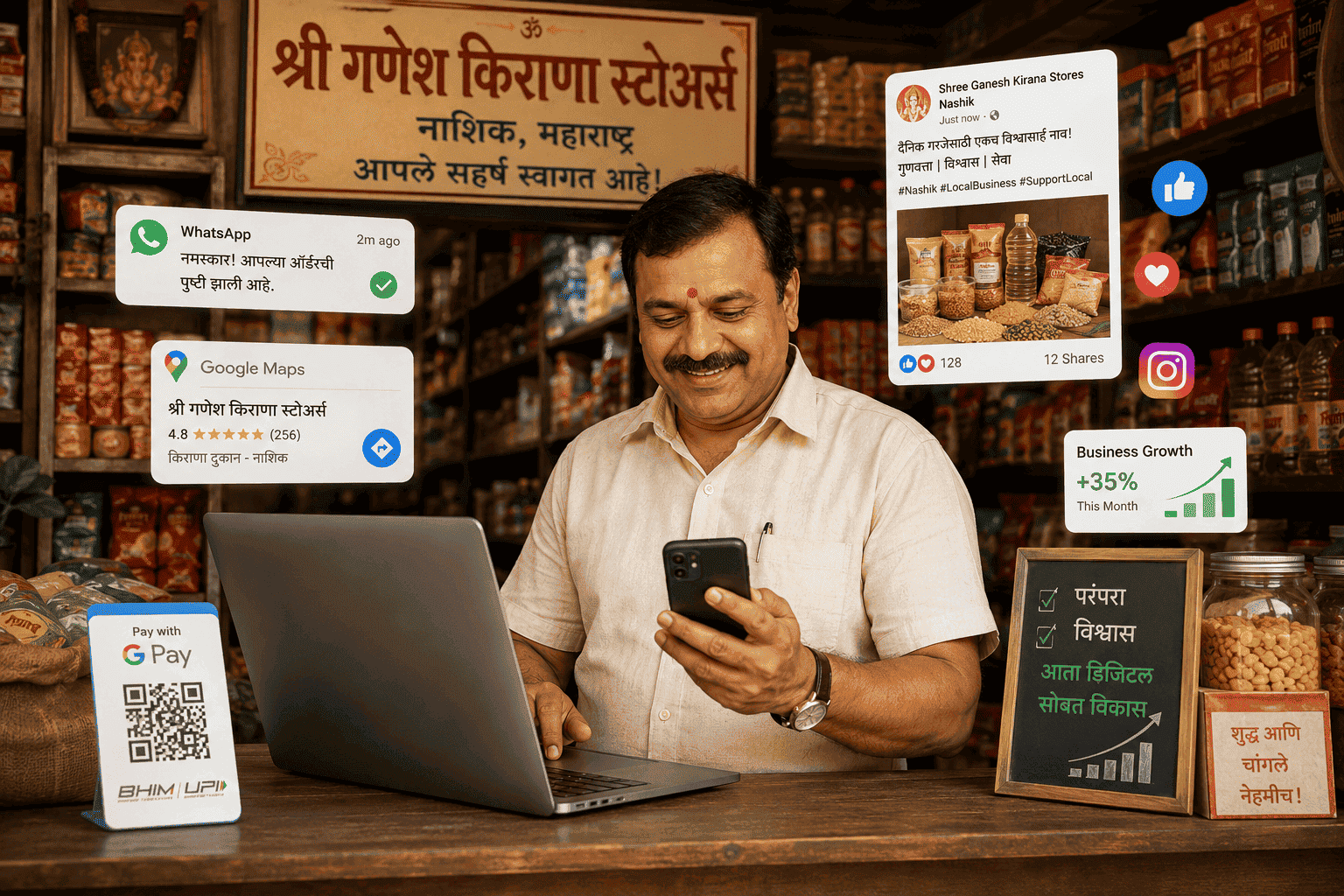
This is the story of how one Nashik business owner slowly transformed a traditional local business into a digitally active and growing brand using simple and affordable technology tools.
The Problem
Rajesh owned a small local business in Nashik and relied mainly on regular customers and offline referrals. While the business had loyal customers, growth had become slow over time.
Main Challenges
- Limited customer reach
- No online visibility
- Manual billing process
- Difficulty managing customer inquiries
- Low repeat customer engagement
Most customers only discovered the business through local recommendations, which limited growth opportunities.
Step 1: Creating a Google Business Profile
The first digital step was creating a Google Business Profile. Initially, Rajesh did not realize how many customers searched online before visiting local businesses.
Once the profile was created, customers could easily find the business on Google Search and Google Maps.
Improvements Seen
- Increased phone inquiries
- More walk-in customers
- Better online visibility
- Customer reviews improved trust
Uploading real business photos and updating business details regularly helped the profile perform better in local searches.
Step 2: Using WhatsApp Business
The next major improvement was shifting customer communication to WhatsApp Business. Instead of manually replying to every message repeatedly, automated features helped save time and improve professionalism.
Features Used
- Product catalogs
- Quick replies
- Greeting messages
- Customer labels
Benefits
- Faster customer responses
- Better inquiry management
- Professional communication
- Easier order tracking
Customers found it easier to browse products and contact the business directly.
Step 3: Social Media Marketing
The business then started using Instagram and Facebook to showcase products and connect with local customers online.
Simple posts, product photos, customer testimonials, and short reels helped increase visibility significantly.
Content Shared
- Product photos
- Customer reviews
- Offers and discounts
- Behind-the-scenes videos
- Festival promotions
Results
Social media helped the business attract younger customers and increase engagement regularly.
Step 4: Digital Payments
Introducing digital payments made transactions faster and more convenient for customers. QR code payments reduced cash handling and improved overall customer experience.
Payment Methods Added
- UPI QR code
- Google Pay
- PhonePe
- Paytm
Benefits
- Faster payments
- Better transaction records
- Customer convenience
- Reduced payment confusion
Many customers preferred cashless payments because of speed and simplicity.
Step 5: Organizing Business Data
As orders and inquiries increased, managing records manually became difficult. Google Sheets and Google Drive helped organize business operations digitally.
Data Managed
- Sales records
- Inventory tracking
- Customer orders
- Supplier information
- Expense tracking
Why It Helped
Digital organization reduced mistakes and improved overall business management.
The Results
Within a few months, the business started seeing noticeable improvements in customer engagement and daily operations.
Positive Changes
- More customer inquiries
- Increased repeat customers
- Better online visibility
- Faster communication
- Improved customer trust
Most importantly, the business owner became more confident using technology for daily operations and future growth.